
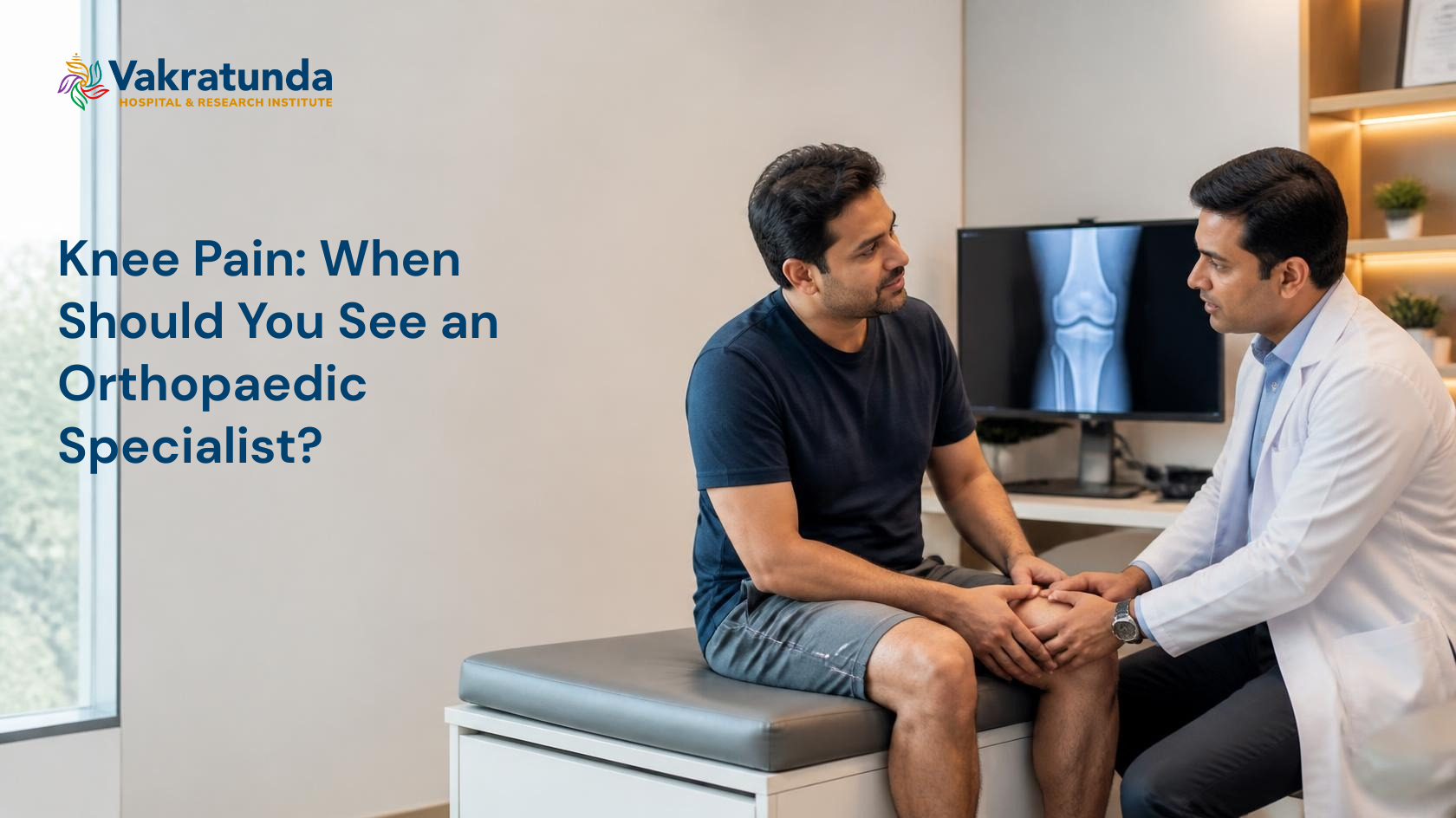
Knee pain is common, but that does not mean you should always ignore it.
A mild knee ache after an intense workout, long walk or unusual physical activity may improve with rest. But pain that keeps returning, gradually gets worse or starts affecting your everyday activities may need professional evaluation.
The knee is one of the body's major weight-bearing joints. It helps you walk, climb stairs, sit, stand and move comfortably. Because it handles significant load every day, problems involving the bones, cartilage, ligaments, tendons or surrounding tissues can affect mobility and quality of life.
So, when should you see an orthopaedic specialist for knee pain?
The answer depends on the cause, severity, duration and associated symptoms.
This guide explains the common warning signs, possible causes of knee pain and when professional orthopaedic care may be appropriate.
What Causes Knee Pain?
Knee pain can occur for many different reasons. It is not limited to older adults.
Common causes include:
- Osteoarthritis
- Sports injuries
- Ligament injuries
- Meniscus injuries
- Tendon problems
- Muscle strains
- Fractures
- Joint dislocation
- Overuse injuries
- Previous knee injuries
- Inflammatory joint conditions
- Age-related wear and tear
The cause of knee pain can vary significantly from one person to another.
For example, knee pain after a sports injury may be related to a ligament or cartilage problem, while gradual knee pain in an older adult may be associated with osteoarthritis.
That is why identifying the underlying cause is more important than simply treating the pain.
8 Signs Your Knee Pain May Need an Orthopaedic Specialist
Not every episode of knee pain requires specialist treatment.
However, certain symptoms suggest that you should consider getting your knee evaluated.
1. Knee Pain That Doesn't Go Away
If your knee continues to hurt despite rest and basic self-care, it may be time to consult a doctor.
Persistent pain can sometimes indicate an underlying joint, cartilage, ligament or bone problem.
Consider seeking medical evaluation if:
- Pain continues for several days or weeks
- The pain repeatedly returns
- Pain is gradually becoming worse
- You need pain medication frequently
- Knee pain interferes with your daily activities
Instead of repeatedly treating the symptom, an orthopaedic specialist can assess the possible cause.
2. You Have Difficulty Walking or Putting Weight on Your Knee
Your knees play an important role in supporting your body weight.
If knee pain makes it difficult to:
- Walk normally
- Stand for extended periods
- Climb stairs
- Get up from a chair
- Put weight on one leg
- Maintain your usual physical activity
then professional evaluation may be appropriate.
Sudden inability to put weight on the knee, especially following an injury, should be assessed promptly.
3. Your Knee Is Swollen
Swelling is another important symptom to watch.
A swollen knee may occur after an injury, overuse or inflammation.
Pay attention to:
- Sudden swelling after an injury
- Recurrent swelling
- Persistent swelling
- Swelling associated with severe pain
- Swelling that limits movement
If swelling develops suddenly after a sports injury or accident, an orthopaedic assessment can help determine whether there is an injury to the internal structures of the knee.
4. You Hear or Feel a "Pop" During an Injury
A sudden popping sensation during a sports activity, fall or twisting movement should not automatically be ignored.
It may occur with certain ligament, tendon or meniscus injuries.
If a "pop" is followed by:
- Immediate pain
- Swelling
- Instability
- Difficulty walking
- Restricted knee movement
seek medical evaluation.
Early assessment can help determine the extent of the injury and whether imaging or further treatment is necessary.
5. Your Knee Feels Unstable or Gives Way
Does your knee suddenly feel as though it might buckle?
Do you feel uncertain while walking, turning or climbing stairs?
Knee instability can occur for different reasons, including ligament injuries and other structural problems.
Repeated episodes of the knee "giving way" should not be ignored because they can increase the risk of further injury.
An orthopaedic specialist can assess knee stability and determine whether conservative treatment, physiotherapy, imaging or another intervention may be appropriate.
6. Your Knee Gets Stiff or You Cannot Fully Bend or Straighten It
Limited movement is another reason to consider a medical evaluation.
You may notice that:
- You cannot fully straighten your knee
- Bending the knee has become difficult
- Your range of motion is gradually decreasing
- Stiffness is worse after sitting
- Stiffness makes everyday activities difficult
Reduced mobility can occur with arthritis, injuries and several other knee conditions.
Getting the cause evaluated can help guide appropriate treatment.
7. Knee Pain Is Affecting Your Sleep or Daily Life
Knee pain becomes more significant when it starts affecting your quality of life.
If you regularly experience pain while:
- Sleeping
- Walking
- Working
- Exercising
- Climbing stairs
- Driving
- Performing household activities
it may be time to discuss your symptoms with an orthopaedic specialist.
You do not have to wait until the pain becomes unbearable before seeking professional advice.
8. Your Knee Pain Started After an Accident or Injury
Knee injuries can happen during:
- Sports
- Gym workouts
- Running
- Cycling
- Falls
- Road accidents
- Workplace accidents
- Sudden twisting movements
After an injury, symptoms such as severe pain, swelling, deformity, inability to bear weight or restricted movement should be assessed promptly.
Some injuries may require only conservative treatment, while others may need more detailed investigation or surgical intervention.
When Is Knee Pain an Emergency?
Most knee pain is not a medical emergency.
However, seek urgent medical attention when knee pain occurs with serious symptoms such as:
- Major trauma or accident
- Visible deformity
- Inability to bear weight after an injury
- Severe and rapidly increasing swelling
- A suspected fracture or dislocation
- Severe pain following significant trauma
- An open wound around the injured joint
- Loss of sensation or significant weakness in the leg
In these situations, delaying evaluation may not be appropriate.
For serious trauma or suspected fractures, a hospital with emergency and orthopaedic trauma support can provide timely assessment and stabilisation.
Knee Pain in Different Age Groups
Knee problems can affect people at different stages of life, but the causes may differ.
Knee Pain in Young Adults
Younger adults may experience knee pain because of:
- Sports injuries
- Running-related overuse
- Gym injuries
- Ligament injuries
- Meniscus problems
- Muscle or tendon injuries
Treatment may involve rest, physiotherapy, activity modification, medication or, in selected cases, surgical treatment.
Knee Pain in Middle Age
As people become older, previous injuries, activity levels, body weight and joint wear may contribute to knee problems.
Recurring pain, stiffness and reduced mobility should be evaluated rather than repeatedly ignored.
Knee Pain in Older Adults
Osteoarthritis becomes an increasingly common cause of knee pain with age.
Symptoms may include:
- Gradual pain
- Morning or activity-related stiffness
- Difficulty climbing stairs
- Reduced walking ability
- Joint stiffness
- Reduced range of motion
Treatment depends on the severity and individual circumstances.
Not every person with knee arthritis requires surgery.
Does Every Knee Pain Need Surgery?
No.
This is an important point.
Seeing an orthopaedic specialist does not automatically mean you will need surgery.
Depending on the diagnosis and severity, treatment may include:
Conservative Treatment
This may involve:
- Activity modification
- Rest
- Appropriate medication
- Weight management where relevant
- Physiotherapy
- Strengthening exercises
- Mobility exercises
Rehabilitation
Physiotherapy may help improve:
- Muscle strength
- Joint mobility
- Balance
- Stability
- Functional movement
Minimally Invasive Procedures
For selected conditions, an orthopaedic specialist may consider minimally invasive procedures such as arthroscopy.
Surgical Treatment
Surgery may be considered when there is a significant structural problem or when symptoms remain severe despite appropriate non-surgical treatment.
The right treatment depends on the diagnosis — not simply the intensity of the pain.
What Happens During an Orthopaedic Knee Consultation?
If you visit an orthopaedic specialist, the consultation usually begins with understanding your symptoms and medical history.
The doctor may ask:
- When did the pain start?
- Did it begin after an injury?
- Where exactly does it hurt?
- Is the pain constant or intermittent?
- Does the knee swell?
- Does the knee lock or give way?
- Can you walk normally?
- What activities make the pain worse?
- Have you had previous knee injuries?
- Have you already tried any treatment?
The doctor may then examine the knee's:
- Movement
- Stability
- Swelling
- Tenderness
- Strength
- Alignment
Depending on the clinical findings, imaging may be recommended.
What Tests May Be Used to Evaluate Knee Pain?
The appropriate investigation depends on the suspected condition.
X-Ray
An X-ray can help evaluate bones, alignment, fractures and certain changes associated with arthritis.
MRI
An MRI can provide detailed information about soft tissues such as:
- Ligaments
- Meniscus
- Tendons
- Cartilage
- Other internal knee structures
CT Scan
In selected cases, CT imaging may provide additional information about complex bone injuries or other structural problems.
Your doctor will determine which investigation is appropriate based on your symptoms and examination.
When Is Knee Replacement Considered?
Knee replacement is generally considered for selected patients with significant joint damage and persistent symptoms that substantially affect daily life, particularly when appropriate non-surgical treatment has not provided sufficient relief.
Common factors considered include:
- Severity of joint damage
- Persistent pain
- Reduced mobility
- Difficulty performing daily activities
- Impact on quality of life
- Response to non-surgical treatment
- Overall health
Knee replacement should not be viewed as the first solution for every person with knee pain.
A specialist evaluation is necessary to determine whether it is appropriate.
How Can You Protect Your Knee Health?
While not every knee problem can be prevented, several habits may support healthy joints.
Maintain a Healthy Weight
Maintaining a healthy body weight can reduce the load placed on weight-bearing joints.
Build Muscle Strength
Strong muscles around the knee and hip can support movement and joint function.
Warm Up Before Exercise
A proper warm-up can prepare your muscles and joints for physical activity.
Increase Exercise Gradually
Suddenly increasing running, gym or sports activity can increase the risk of overuse injuries.
Use Proper Technique
Correct technique matters during sports, strength training and other physical activities.
Don't Ignore Repeated Pain
If the same knee pain keeps returning, consider getting it evaluated rather than repeatedly pushing through it.
Orthopaedic Knee Care at Vakratunda Hospital, Nashik
Vakratunda Hospital's Orthopaedics Department provides comprehensive bone and joint care in Nashik, including treatment for joint disorders, trauma, sports injuries and other orthopaedic conditions.
The department's services include:
- Joint replacement surgery
- Knee replacement
- Trauma and fracture care
- Sports injury management
- Spine care
- Arthroscopy
- Pediatric orthopaedics
- Fracture management
- Arthritis care
- Joint-related conditions
The hospital's orthopaedic team includes senior orthopaedic surgeons with experience across areas such as knee replacement, joint replacement, trauma surgery, arthroscopy, sports injuries, arthritis care and knee disorders.
Vakratunda Hospital describes an integrated treatment pathway that can include clinical assessment, imaging, specialist review, intervention where required, post-operative monitoring and structured rehabilitation. Its orthopaedic infrastructure includes modular operating theatres, C-Arm imaging, arthroscopy systems and access to digital X-Ray and MRI services.
For accident and fracture cases, the hospital also provides 24×7 emergency and trauma support.
This integrated approach can be particularly useful for patients whose knee condition requires more than a simple consultation — such as advanced imaging, specialist assessment, surgery or rehabilitation.
Frequently Asked Questions About Knee Pain
When should I see an orthopaedic specialist for knee pain?
Consider seeing an orthopaedic specialist if knee pain persists, repeatedly returns, affects your daily activities, causes swelling or stiffness, limits movement, makes the knee unstable or follows an injury.
Is knee pain always caused by arthritis?
No. Knee pain can result from arthritis, sports injuries, ligament or meniscus injuries, tendon problems, fractures, overuse and several other conditions.
Can knee pain go away on its own?
Some mild knee pain caused by temporary overuse or minor strain may improve with appropriate rest and activity modification. Persistent, severe or recurrent pain should be medically evaluated.
How do I know if my knee injury is serious?
Severe pain, major swelling, inability to bear weight, instability, deformity or symptoms following significant trauma can indicate a more serious injury and should be assessed promptly.
Does knee pain always require surgery?
No. Many knee conditions can be managed with non-surgical treatment such as physiotherapy, exercise, medication and activity modification. Surgery is considered only when clinically appropriate.
When is knee replacement recommended?
Knee replacement may be considered when significant joint damage causes persistent pain and functional limitation and non-surgical treatments have not provided adequate relief. A specialist evaluation is required.
Is arthroscopy used for knee problems?
Arthroscopy is a minimally invasive procedure that uses a camera and small instruments to examine or treat selected joint problems. Whether it is appropriate depends on the specific diagnosis.
Where can I get orthopaedic treatment for knee pain in Nashik?
Vakratunda Hospital in Pathardi Phata, Nashik, provides orthopaedic and trauma care including knee and joint treatment, arthroscopy, joint replacement, fracture care and sports injury management.
Don't Let Knee Pain Decide How You Live
Knee pain may start as a minor inconvenience — a little discomfort while climbing stairs, getting up from a chair or taking a walk.
But when pain persists, returns repeatedly or starts limiting your movement, it is worth finding out why.
The goal of orthopaedic care is not simply to reduce pain. It is to understand the underlying problem and help you maintain or regain mobility.
If your knee pain is persistent, worsening or affecting your everyday life, consider consulting a qualified orthopaedic specialist.
Looking for Orthopaedic & Knee Care in Nashik?
Vakratunda Hospital provides orthopaedic consultation, joint care, trauma treatment, arthroscopy, joint replacement and rehabilitation support at Pathardi Phata, Nashik.
Vakratunda Hospital
The Wellness Square, Survey No. 318/1/3, Pathardi Road, Pathardi Phata, Nashik – 422010
Appointments: 0253-2386001 / 02
24×7 Emergency: +91 88882 36000
Medical Disclaimer: This article is intended for general educational purposes only and should not be considered a substitute for professional medical advice, diagnosis or treatment. The appropriate treatment for knee pain depends on the individual's condition and clinical assessment. In case of a serious injury or medical emergency, seek immediate medical attention.